
The future of software: Steve Yegge and Ajit Banerjee in conversation

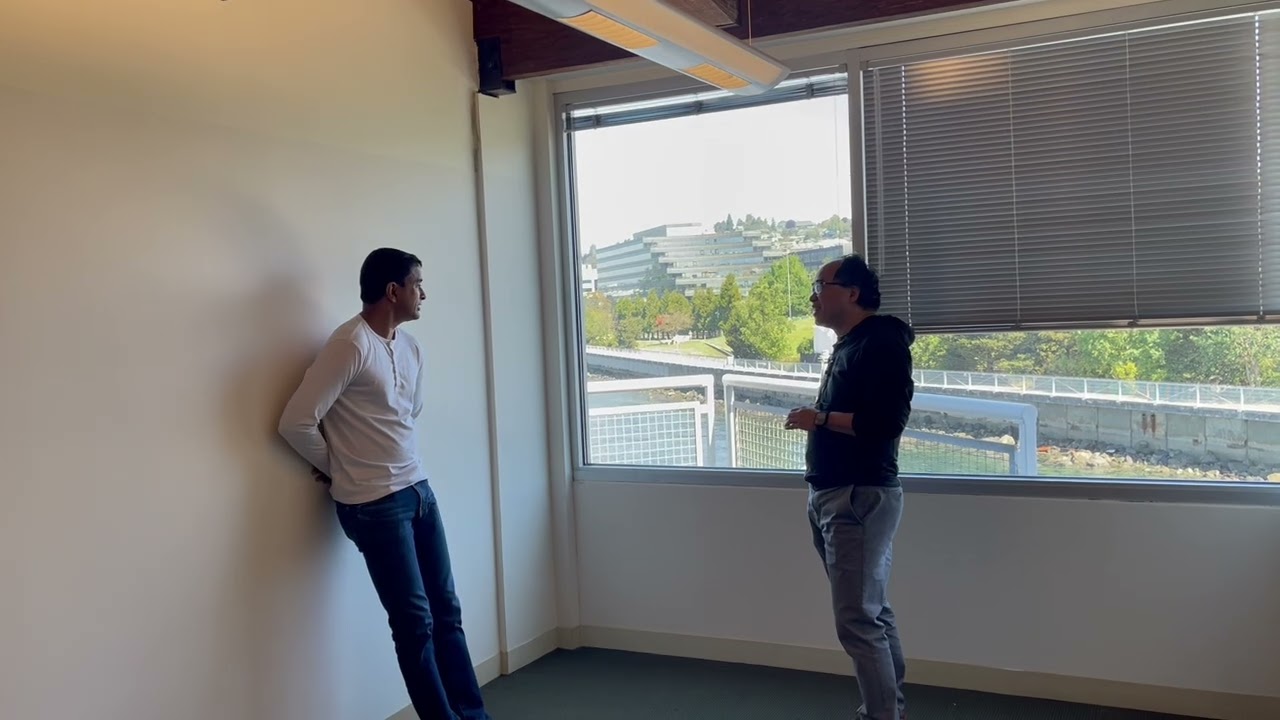
On May 20, 2026, AI House Seattle hosted a fireside chat with two people who have been thinking about software and teams as long as anyone in the industry: Steve Yegge — prolific engineering writer, creator of Beads and Gastown, author of Vibe Coding — and Ajit Banerjee, co-founder and CEO of SageOx. I had the pleasure of moderating.
The conversation ranged from how Steve and Ajit each discovered agentic engineering, to the three AI literacy cohorts Netflix has data on, to what roles actually survive in a world where code is free. Below is the full transcript, lightly edited for readability.
Transcript
Milkana: I would like to introduce Steve and Ajit — probably many people already know them, but they have been around the Seattle tech area for a very long time. They worked together way back when, maybe two decades ago, in early Amazon days. Since then, Steve has spent time at Google. He is a very prolific writer who has been writing well before AI about tech culture and languages. More recently, he has become one of the leading voices of the AI revolution. He wrote the book on vibe coding. He is also the creator of Beads and Gastown. We are so lucky to have him. There was one week last month when I opened the New York Times and Steve was profiled, and then there was an HBR article, and then he won a Tim O'Reilly award — all within a few days.
We also have Ajit Banerjee, someone I'm very lucky to work with here at SageOx. This is not his first rodeo — his fourth startup, with several exits before. His most recent company before SageOx was Zed Hub, acquired by Hugging Face. The technology he built is currently powering over 100 petabytes of data used by millions of developers daily. He made rounds at Meta and Apple and was on the very original EBS team at AWS.
Steve, what was your leap into AI? How did you get started?
Steve: How did I get into AI — the same way you all did. November 2022, ChatGPT came out and I immediately tried to write Emacs code. And it kind of did. And I was like, whoa.
The pivot points from there: realizing it was viable, realizing I was racing ahead of everybody else. Everyone in the enterprise was focused on completions and I was doing chat. Then I got into agents and everyone else was using Cursor and chat. Then I got into multi-agent and everyone else was still on Cursor, still on Copilot.
I was head of engineering at Sourcegraph when all this went down — a code search company, which is still a pretty good business because we're generating 10 times more code than we used to. But AI dropped right then and we had to pivot to be an AI company. We built a coding assistant. And I'll be honest — Claude Code was such a good idea. I was so close to it. I was talking to my boss about it at Sourcegraph at the time. They needed to use tools, they needed to get the human out of the loop. But I'm old school and I grew up when bytes mattered. I'm a little too frugal to have thought of an idea as brazenly token-hungry as Claude Code.
Every time we change the form factor — completions to chat, chat to agents, agents to orchestrators running bunches of agents — it's because we find a way to spend tokens ten times faster. Each form factor shift is roughly a 10x token burn increase. That's the story.
Milkana: Ajit, what was your path into agentic engineering?
Ajit: The first thing I want to say is that I have a term now: BC — Before Claude. Nothing about my life before December 2025 is relevant to my intellectual thinking anymore. I'm this quiet infrastructure guy. I would never be in front of 200 people next to a legend like Steve unless this world had changed. We challenge each other on our team: "Is that statement BC or AD? You can't build that the old way — are you sure? Or are you scared of something?" This framing has been a big unlock.
Ryan and I have worked with Steve way back in our Amazon days — really, really old Amazon parts, 2003. But what we've been focused on at SageOx from the beginning is teams. We believe software and knowledge work always will be a team sport.
One thing that's going to make everyone uncomfortable: what we've found is that for a team to cook the way we are cooking, it requires a level of radical transparency that creates incredibly uncomfortable experiences. When I told Milkana she was joining us and we'd be livestreaming all our decisions, her reaction was literally to cover her stomach. That is the level of discomfort one feels at that level of openness. Steve has been telling us the same thing — actually putting your dirty laundry out while you're thinking, sharing it with your team, is essential.
I want to be very clear: I've been having the time of my life. We raised our seed at $15 million. I left Hugging Face in May of last year and walked away from three years of vesting. And the energy we have on our team is something else to watch. There are days when Milkana has tears talking about what we're building. There are days where we are like kids in a Lego store. For all the talk of AI efficiency, not many people talk about the joy — and I want that said loud.
Milkana: Let's double-click on what it means to work in this AI space. What's the SageOx way of working?
Ajit: We have two small rooms in this space, and you'd think we'd keep teams separate across those two rooms because they're small and we're packed in. But we actually sit right next to each other at this distance, and Ryan sits next to me and Galex sits next to me.
The delight happens when we're working. We don't talk much — we have our standup and then go into deep concentration. And then suddenly something shows up, like a little drop of wisdom from the side: "Hey, I figured out you're working on the V1 of this codebase — there's actually a V2 and here's how it connects." Because we have all these agents murmuring to each other. The first time it happens, it's real. It's like the Hunger Games when the parachute drops in with a little idea. And then you get addicted to this level of flow.
I think there have always been great teams that could live at this level — completing each other's thoughts, making no-look passes. This technology, because it speeds everything up, allows many more teams to have this experience.
Milkana: I should add some context for those not as familiar with SageOx. When Ajit describes those murmurs — they happen from other agents working on the team, emitting updates on what they're working on. That's how in real time you see what's happening across the team, both humans and agents. I don't think Ajit gave enough credit to the fact that yes, Claude is amazing, but we've built a lot of these experiences to make those connections happen in real time.
Steve, how do you work? You have a fleet of agents. What does your day look like?
Steve: First, quick show of hands — who uses one or two agents throughout the work day? Okay. Who uses three or four or more? Okay, we've got a pretty AI-literate audience here.
The way I work: I made Beads, and that was the way I worked. Then Gastown doubles down on that. Gastown is all about swarming. The basic workflow: create work, do the work, create more work, do the work. You do a design, work it out, file a bunch of Beads for an implementation plan, review it. You've just created a bunch of work. Then you say, swarm it — and it grinds away. I love it.
But I encourage people to write their own orchestrators. As soon as you get to about four agents, it gets really hard to keep track of which one is working on which thing. You accidentally give a big project to the wrong agent, it tries to make you happy by doing it in the wrong place, and then you've got cleanup. The cognitive overhead is high. When you get into that space, you start building your own tooling, and I think that's where a lot of people are right now.
Milkana: Can you talk about the cognitive overload? How do you stay sane?
Steve: Right after I published Vibe Maintainer and put out Beads and Gastown — I was getting hammered by 50 to 100 pull requests a day. I did the same thing I always do: I got help. I turned it over to a bunch of people who are maintaining it now, and I was able to step back.
And what I realized was that I was racing way too far ahead of everyone. I was blocked on adoption — on AI literacy. So let me share a story from Ezra Savard at Netflix. He's been training everyone at Netflix on AI for three years. They actually teach our book — the vibe coding book — in their program. They do vibe coding in cohorts. After a lot of data-driven analysis, they found there are basically three cohorts of AI literacy.
Cohort zero: non-users. They chat occasionally but spend essentially zero tokens. There are probably none of them in this room.
Cohort one: single-agent synchronous throughout the work day, roughly 4 million tokens per day. This is the first level of AI literacy, and it's the baseline your whole company needs to reach before you can even think about pivoting. And here's the incredible finding: you can get people from cohort zero to cohort one in four and a half hours — if you bring their manager and their team, they're on the clock, they bring their actual work with them, they have a good trainer, and there are no more than 6 to 10 people in the session. All of those have to be true. But then five hours later, they get it. Their mind is open.
Cohort two: the only one that really matters. 12 to 15 million tokens a day. This is when you finally trust your agent enough to let it go work by itself — you've spun up multiple agents and you're just reviewing their outputs. You are officially trainer-level good with AI. Any token spend above that is vanity metrics. And you can get people from cohort one to cohort two with just one more class in the same format, a couple months later.
So the training problem is totally solvable. But there's also a culture problem. Companies are filled with people whose whole identity is saying no. Those people will kill your company as you try to pivot to AI, because the shape of your company is going to be really different.
Milkana: So you just gave us the playbook for how enterprises should adjust. But what about individuals — people here, or their friends, trying to figure out: is my job at risk? How do I change? A line I keep coming back to: you are either at the beginning of your career right now, or you are at the end of it. You're either getting on this train, or you're missing it. What advice do you have for individuals?
Steve: First: you're not any further ahead or behind than anyone else. We're all roughly plus or minus six months from each other. None of this is really that hard to figure out. If somebody makes breakthroughs, you can catch up pretty quick.
It does take about a year to build your AI muscle — because you need to build enough trust with the models that you can actually predict what they're going to do pretty reliably, and you know what mistakes to avoid. The models will screw you any chance they get. People don't realize this right now. We're at the beginning of lots of big services catching on fire, because everyone is doing exactly the wrong thing: leaning too hard, vibe coding straight into production, trusting their LLMs. And it catches fire and burns.
So if you're looking for an opportunity — I predicted a year and a half ago there would be a new profession: the Fixers. The Winston Wolves that come in and fix your screwed-up vibe coded mess. You all are already qualified for that. You're experimenting, you understand how dangerous this stuff is.
My advice to everyone: the world is changing really, really fast. You've got to be super neuroplastic. Nothing like fear and hunger to make you neuroplastic. Find what works for you. You're going to have to hustle — you need to know the old world and you need to know the new world, and you'll need to navigate both of them for a while.
Ajit: I want to add a bunch of stuff here. I think one of the benefits of being older is that we've seen previous really nasty crises. I was in the dot-com boom in the Bay Area, at a company called InkToMe. InkToMe was up there with Amazon, eBay, AOL. One day I was at a party and met Dr. Rajiv Motwani — advisor to Larry Page and Sergey Brin — who told me he thought our search engine was terrible. I came back and told my bosses there was this new company called Google. Two years later I was out of a job.
The lesson I learned then: when the world changes this much, nobody in your vicinity actually has a clue what's happening. So when you're cooked, your friends are cooked with you.
This thing Steve talks about — decision making in ambiguity — it's a muscle. If you've just worked in a big company, you don't get to develop it. If you've never had decisions where every decision could tank your company, you haven't built that muscle.
And so when I tell people that everything is different, they say, "I'm going to wait until it stabilizes." This is across the board — early career, late career. There is no stabilization in our foreseeable future. You have to go try things. All your friends telling you it's business as usual may also be cooked.
Milkana: You've both alluded to how the next five years will be chaotic. What practical advice do you have for navigating the turbulence ahead?
Ajit: First thing: everybody thinks there are only four companies where people have got it made — Nvidia, Anthropic, OpenAI, and maybe one other. Everybody else has no agency. I despise that framing. You've got agency. There are so many SaaS companies that haven't done anything interesting in 20 years. You can figure out an angle based on your domain knowledge and attack them.
The hardest part I'm seeing is that sitting for two or three months with a group of people, working really hard on an angle, requires a level of calm and agency that is hard to maintain amid constant whiplash — new models, geopolitical events, market swings. My best advice is what Ryan and I did: lock ourselves up, don't emerge until you have a working idea, and then pitch people to join you. You literally have to go somewhere and think: what do I have that is worth bringing to the world? And work your ass off.
Steve: I would add: team up with other people. You can accomplish more together than by yourself. It's really tempting to lock yourself in your basement with 18 agents and try to take over the world. I know a lot of people doing that. I don't think any of them are going to take over the world.
Milkana: How do you distinguish hype from real breakthroughs? There's so much happening — one of the leaders at Anthropic said even she didn't know everything Anthropic was doing. How do you stay on top of it?
Ajit: I learned a hack from Steve: he keeps an option portfolio of problems he has in his back pocket and keeps throwing them at AI agents, watching them get better and better over time. The insight I took away is that until you try things yourself, all the hype on X and LinkedIn is almost impossible to understand. So practical advice: just try things yourself. Your intuition about what the models can and can't do is irreplaceable.
The surface of capability is very strange with these systems. At some point they reason like a Feynman-level genius, and then the next question they seem completely lost. You have to figure out the contours on a day-by-day basis. You have to build your own intuition around it. And you have to get more confident in your taste, in your gut feelings, more than you were in the past.
Steve: My first instinct is to completely ignore everything until I've heard about it about 50 times. Which has worked out pretty well so far. I think I'm supposed to look at Obsidian next — I think I've heard of that about 48 times.
I think we've reached a point where there's going to be so much software out there that you're not going to be able to pay attention to it all. You'll need search engines, aggregators, eventually a personal agent that knows what you like and finds stuff for you. But the most important thing is that you're trying to build stuff yourself and you've got a feel for how the models are responding today. Because that changes over time, and you've got to develop your own style and taste and vision.
Look, if you want other people to use your stuff, you're all marketers now. Software doesn't just have to be good. It doesn't just have to be elegant. It has to be packaged well. Everything is a show. Everything is an attention economy. But I wouldn't sweat it too much — most of the stuff people are obsessing over will be forgotten in a few months. So: wait until you've heard about it 50 times, wait a few months, and see what's still standing.
Milkana: A lot of founders here are wrestling with: how do you build something defensible when code is free? What moats actually exist?
Steve: First thing: make sure you know exactly what happens to your product as models get smarter — the bitter lesson. If your product is a bunch of personas, skills, or prompts, the model's going to have all that built in next time around and your company will be out of business. Founders don't seem to know the bitter lesson.
You also have to build something that can't be easily replicated. Anyone can build stuff now — Gastown took me about a month. If you're in SaaS, it's really, really hard to build something that other people will buy because they can build stuff too. And CFOs are tightening their purses. So as a founder, what can you do selling into that hostile market? Build something where they look at it and go: we could rebuild this ourselves, but that's kind of a big project. Maybe we could just rent it.
And aim ahead of the models. Build something that doesn't quite work with today's models — something where you're yelling at the model, "Why don't you understand?" — but you know the next iteration will get it. That's what I did with Gastown. I was building with earlier models and by the time 4.5 and 4.6 came around, the thing actually started working. Aiming ahead of the models is underrated.
Milkana: How do you think roles change for people building products together? We're seeing designers, PMs, other knowledge workers rely on agents more and more. What does work look like in a couple of years?
Ajit: We are in the middle of figuring this out. But I'll be very blunt: world-class thinking has always been scarce. The people who are going to do well are the ones who can think from first principles, work backwards, and don't describe a label to themselves. If you're starting to say "I am a product manager" or "I am a designer," you are going to struggle. You should be able to figure out business, design, product, and tech at the same time.
One of the things I learned from Steve — and from this whole experience — is that we had to go through a cycle of grief and obliterate our old conception of ourselves. Just say: okay, what is it that I can contribute, given the tools we now have? The people who can make that transformation, and who can collaborate with people who are different from them — egolessness and fearlessness — may have a chance.
Steve: There's a VC who famously tweeted that there are only four roles in the new knowledge work world. The first: builder — your PM, engineer, agent-builder, get-stuff-done person. The second: SRE, IT security, maintainer type. The third: hot people. There will always be a role for hot people. And the fourth: grownups.
Those are the four roles. To which I say: thank God I'm hot. (audience laughs)
Milkana: And on the question of human connection — Ajit, I know you've been thinking about this.
Ajit: In a very strange way, the desire for human connection has become more important in this world, not less. Every meeting with Steve has been a step function in our thinking at SageOx. Real connection, no-bullshit, face-to-face — figuring out what's working for you, not what Twitter says is working — is going to become more and more important because of the whiplash we're all feeling. I am not a social person. I want to be in front of a dark screen. But in this new world, I think these kinds of gatherings and actual face-to-face interaction matter exponentially more. I love this space for that.
Audience Q&A
Audience (paraphrased): You've described how fast this is moving. How do you roll it out responsibly — how do you tell your executives this won't bring things down?
Steve: This is the fundamental question. There are companies that are over-adopting — over-confident, under-careful. And there are companies dragging their feet too hard. Striking that balance is incredibly difficult. A concrete example: if you're producing ten times as much code, and your defect rate is roughly constant, you're still shipping ten times as many defects to production. Do you have a plan for that? These are the questions you have to weave into your AI rollout experiments.
I saw one company rolling things out very slowly at the edges of their SDLC — spinning up 100-person innovation teams, keeping the culture side healthy. That's smart. But even they needed a reminder to pump the brakes and ask: are we cramming stuff into production that we shouldn't? I also talked to a bank in Australia that made their engineers five times faster, and the business just couldn't keep up. So they decided to give the business AI too, to help them move faster. The business said: you want us to do five days of work in one day? Not having it. And you can't fire your business. So rolling it out across the whole company slows the brakes a bit — which is, in some perverse way, a feature.
Ajit: Galex on our team is going to be doing a talk on what we're doing with BDD — behavior-driven development. We've been burning a lot of tokens on making sure our surface of behavior is well-understood before we ship. We're thinking about things in terms of files and APIs and code, when we should be thinking about the behavior we want to maintain.
And Rupak — he's a researcher from the Max Planck Institute who works on provable systems. His challenge to us is that with these new tools, you can actually start writing provable code from the beginning in ways that weren't practical before.
One thing I'd add for perspective: in 2006, the only companies using EC2 and S3 were startups like SmugMug. Netflix came in 2009. Capital One in 2011. Nobody remembered this was once considered too risky for "serious" companies. No one is going to adopt this all at once. Use your judgment. If you're a Capital One, please don't go crazy. But if you're a startup, the burst of getting something out is worth the risk.
Audience (paraphrased): I have ADD and agents actually help a lot — I can spawn five or six at once. But the cognitive overhead of managing them is still real. Any tips?
Steve: Pre-tool-use hook. That's your friend. Cloud has hooks now — pre-tool-use — and you can put a big block list of things you don't want it to do. Seriously, your ass. It becomes a kind of guardrail layer for the whole swarm.
Audience (paraphrased): We started this conversation around trust. I've moved to thinking about it more as accountability. At the end of the day, a human head has to roll. Who's accountable when an AI-built system fails?
Steve: You actually do need a human at the top of every accountability chain. The CSO role — Chief Information Security Officer — is kind of designed this way. They're sort of designed to get fired every couple of years. That's by design. The accountability structure exists, but it needs to be wired in from the beginning, not bolted on.
Ajit: I went through the pain of getting SOC 2 certified for my previous company, and it's a lot. The problem is that when people talk about the past, they act like it was great. It wasn't — it was a bunch of forms fitting together. What you actually need is something that convinces the world that you care, at the level you're advertising. If you're AWS S3, you're advertising a certain level of security. If you're a bank, you're advertising another level. A SOC 2 certification doesn't change the brand obligation.
I think we need more nuanced ways to communicate risk levels — something more granular than what lawyers currently have available to them. And I think we need something like a GitHub for AI-generated code: not just the code, but the model that generated it, the intent, the context. Because these models are going to change constantly. Code that was fine against model 1 might have holes when model 2 changes. The whole world of forensics, security alerting, and auditing needs to be rethought.
Audience (paraphrased): I'm using agents to code faster, but figuring out what to build is still hard. And I find myself doing a lot of throwaway tasks. Am I using this wrong?
Ajit: The first part — figuring out what to build — I think of a company searching for product-market fit as a higher-level agent running an observe-orient-decide-act loop across humans and agents. What happens is that the output becomes the bottleneck when the processing gets this good. You end up needing to spend much more time collecting user stories and insights, and doing many more prototypes. That's where the work moves.
On the throwaway tasks: in computer chips there's something called predictive branching, where you execute both sides of a branch before you know which path you'll take. I think we're entering a world where experimentation is so cheap that you should be doing the equivalent. Consistently ask yourself: if I spent ten times more tokens on this idea, could I elevate the experience? You might be surprised. Something that feels like a throwaway might resonate with a segment of your customers.
Steve: What you're describing sounds like what I'd call a wedge project — one that keeps weeding out models. Every model drops and still can't do your thing. I have a set of these. For example, there's a React client I'm building for a game I'm working on, and it's still too hard for Opus 4.7. Keep an inventory of these. Every time a new model drops, pull one out and ask: can you do this yet? Usually no, but one day one will. That's the moment you'll viscerally feel how fast the curve is actually moving. Most of us are only looking back six months and forward three months. These wedge projects are anchors on the exponential — they let you feel the motion over years, not weeks.
Steve: And there's a level nine that I don't think gets enough attention. Levels one through eight are roughly about how you use agents for development — building stuff interactively. Level nine is deploying 24/7 autonomous agents on your behalf to handle things for you. As soon as you've deployed your first agent somewhere that never sleeps — pulling a queue, doing some ETL, watching for a data condition — you've hit level nine. You don't need to build your own orchestrator to get there. You just need to understand how to use them.
Audience (paraphrased): I haven't written a single line of code myself in six months — I just direct agents. What happens when Anthropic stops subsidizing Claude Code at the current discount? What do we do when the music stops?
Steve: Let's revisit why the discount exists. Claude Code gives you roughly a 20x usage factor at about 95% off the API token cost. The reason is that it produces incredibly valuable training data for their next models. It's one of the main reasons Anthropic is ahead. SpaceX bought Cursor specifically for the data so they could train their models. Should they stop caring about that data? I don't see it shutting off — coding is reasoning and reasoning is problem-solving. They're making general problem-solving models by teaching them to get better and better at coding. That data is going to remain valuable until models can really do everything, at which point we're all in a different conversation.
That said: the open source models lag by about seven months. By summer, we're going to have models as powerful as today's Opus running on local GPUs. The open source path is real. The models only have to be as good as Opus is today for the whole game to have changed permanently — and that's already an engineering problem, not a research one. Distillation is also allowing giant models to run on much smaller ones. I'm tempted to think we'll have something Sonnet 3.5-class running on a Mac Mini within the year.
The evening closed with a raffle of signed copies of Steve's book. The question was: "What's one part of building software you think will not change with the adoption of AI?" Some of the best answers from the crowd: "Building software is a people problem, not a technology problem." "Understanding and writing down clearly the problem to be solved." "Figuring out useful problems to solve will still be hard." "The need for humans to understand other humans' intent." And, perhaps most honestly: "Screaming expletives at the computer."
The recording was made at AI House, Seattle, on May 20, 2026. A signed copy of Steve's book, Vibe Coding, was raffled to lucky attendees. Questions and more: feedback@sageox.ai.