

It is not the text, it is the context. It is not cognition, it is metacognition. Rules for teams in 2026
What we do at SageOx:
- Don't compete on intelligence. Neither with each other nor with the models.
- Make being wrong cheap and public. Do not worry about being right, as long as you get it right.
- Tell stories, not status. Build AI-based tools like Murals to see the godlike creativity that is being unleashed.
- Let the knowledge gossip. SageOx tells your colleagues everything that you've learned.
Trust is what makes it work
None of these habits survive without trust. You don't admit a mistake to people you think will use it against you. You don't kill your own belief in front of a room that keeps score.
Ryan and I learned how to innovate and trust each other through a period of hypergrowth. That's what we built deep into SageOx's DNA, and it's why, at that long table in September 2024, we weren't afraid of the tsunami. We were looking forward to surfing it.
"Trust each other again and again. When the trust level gets high enough, people transcend apparent limits, discovering new and awesome abilities for which they were previously unaware." — David Armistead
Quotation reproduced in 50 Digital Team-Building Games.
“You can work long, hard, or smart, but at Amazon.com you can’t choose two out of three”
— Jeff Bezos, 1997 shareholder letter, reproduced here
Ryan and I were the youngest two principal engineers in Amazon in the early 2000s. He is younger (and smarter)!
We worked closely together through Amazon's hypergrowth. There was something about the culture of that era that made pioneers out of regular folks. There was disorientation and miserable hours, but also an exhilaration of building tech just in time to meet the next Q4 scale.
In September 2024, Ozgun got together a bunch of old Amazon engineers from the foundational teams (DSE / SPLAT / PMET / Apollo / etc.). These were all folks who had learned to innovate under fire.
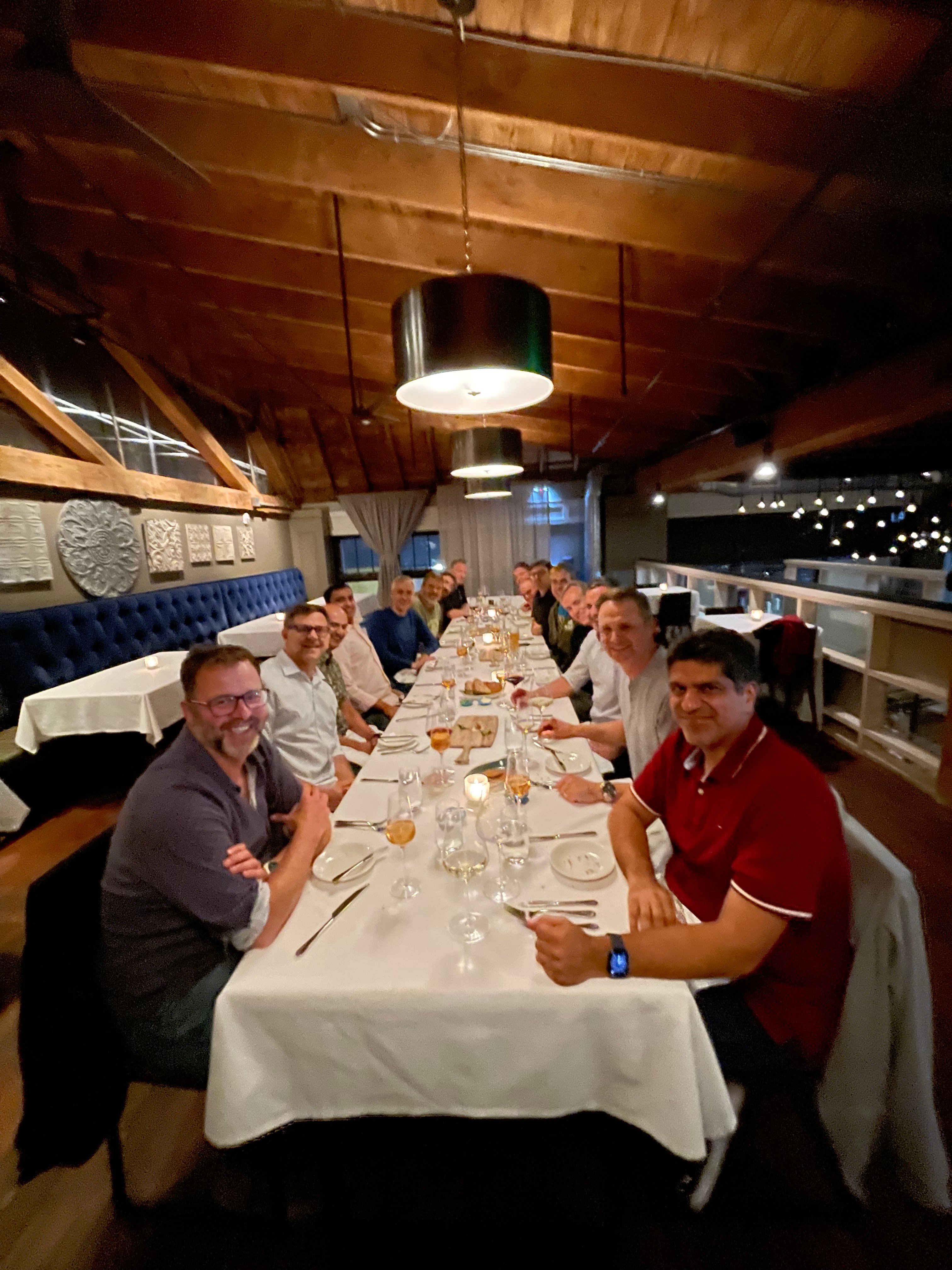
Sept 26th, DSE reunion. Brilliant engineers, one shared blind spot. Scroll down to see how we fixed it.
Ryan and I talked to each other and came up with two loose ideas:
- The next five years were going to be the most exciting time in tech
- The only way to make good bets about the post-tsunami world was getting our hands dirty
I was in the middle of integrating XetHub with HF. But the moment that project finished in May 2025, I quit HF and started working furiously on ideas inspired by Steve Yegge and Paul Gauthier.
When Opus 4.5 dropped on 11/24/25, we were ready. We had already torn down the old rules in our heads and gone through our stages of grief. We started calling the time before that date the B.C. era (Before Claude). We realized quickly that when intelligence became cheap and abundant, sensemaking in teams would be the next challenge: the scarce resource of group attention would need a lot of help. What SageOx would generate was shared context: why we decided, what we tried, rather than the final solution. This idea is obvious to everyone now, with the coining of the term 'Multiplayer AI'. We saw the challenges of converting the 1000x engineer to a 40x team first. And started building both the tech and the culture needed for that paradigm shift, in the open.
Shout-out to the metacognitive principles coming out of Amazon LPs
When I joined Amazon from Inktomi in Jan 2003 (the stock was at $18!), it was immediately obvious that there was something special about the culture there. It has taken me a long time to give homage to the extraordinary leadership of Jeff Bezos and his S Team for creating the manifesto that allowed teams in Amazon to flourish and create through the incredible early 2000s.
| Habit | What it looks like | Why it matters more now |
|---|---|---|
| Say your mistakes out loud | Share errors in public, early, without drama | Destigmatizing ego damage allows humor in the AGI era |
| Try to disprove your own belief | Look for the evidence that you're wrong | Most of the stuff in our brain from the B.C era is wrong |
| Separate the idea from the person | Argue hard, then commit | No one's identity depends on winning, so the next release doesn't hurt anyone's pride |
| Stay a beginner on purpose | Make "I don't know" a normal thing to say | Every model release becomes something to learn from instead of a loss |
As founder and CEO, I know that if I can recreate the best aspects of Amazon culture from that era, success is guaranteed.
“Point of view is worth 80 IQ points”
— Alan Kay, Coors Television talk
Ryan and I also knew there was a key difference between the A.D. world (everything after Opus 4.5) and the world where we had cut our teeth. Amazon was obsessed with frugality, was a confrontational but data-driven culture and prided itself on execution. We had a sense that we were tipping into a world of abundance and creativity because the clankers were going to take away all the yak shaving: the decisions that were left were going to be the ones that were human and creative.
Enter Milkana. Twice an immigrant (Bulgaria → Canada → US). Successful exec, entrepreneur, all-round first-class mensch, and intrepid traveler to Papua New Guinea and West Africa.
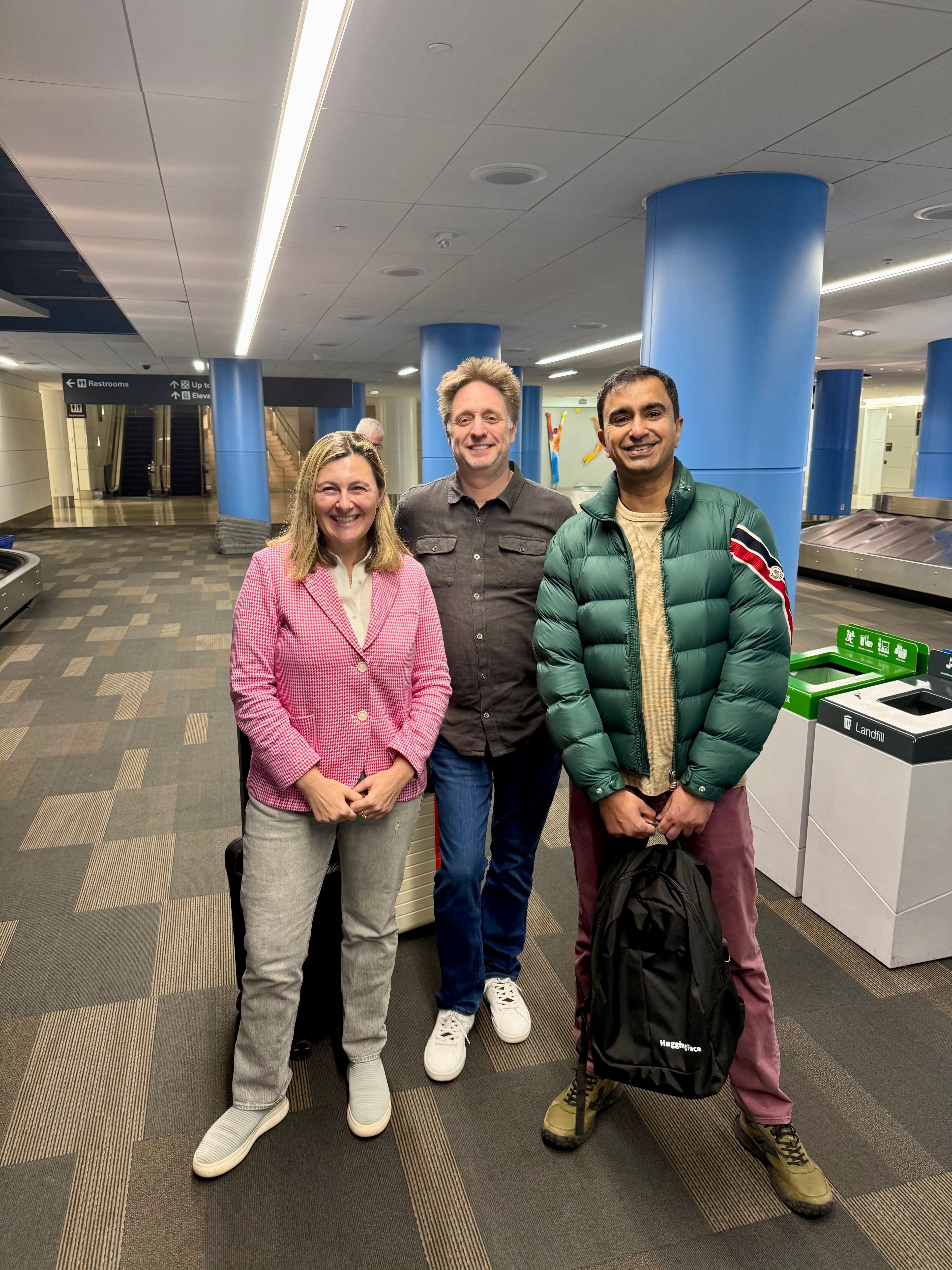
Milkana leading the fundraising adventure, mid March, SFO
Within the first week, she was telling us not to focus on the brainy techs with their massive displays running multiple Claudes. Instead, focus on the PMs, the creatives. Basically, make SageOx work not only on the CLI tools beloved to Ryan and me but every tool that every knowledge worker in the company would use. Build the real hive mind that would work for every kind of neurodiversity that would populate the strong-mighty teams of the A.D. era. She wants the 40x just as bad as anybody, but she wants to get there while allowing the humans to flourish.
The other great insight from her was that the A.D era could result in the engineers building a ton of features without any coherence or business value. She has insisted on a cadence of explore-exploit. In the first part, we open our eyes to the torrent of diamonds. And then, figure out how to lay it out in a systematic manner so that our customers can make sense and get delight from our offerings instead of getting muddled by it.
Quick aside: brains in jars
While Ryan and I were grabbing our surfboards, I found some of the most brilliant folks retreating to the tried and tested. Every new model release was another blow to their ego. Denial, anger, bargaining, repeat. The releases aren't slowing down.
That's the antipattern for us at SageOx: brainy techs becoming “brains in jars,” protecting their image of being brilliant and getting hurt by change. We want antifragile folks who tinker, learn, and get more creative with every release. Don't compete on intelligence. Stay a beginner on purpose.
Summary
So there you have it. While the rest of the tech world has been going through existential angst in the A.D. era, everybody who comes and sees the SageOx gang is infected with childish glee at the possibilities. David Heinemeier Hansson (DHH) described his mood during the Rails World 2026 opening keynote as “AI delirium” or “AI euphoria”: delight, not fear. (Keynote transcript, 00:35:10.) The formula is simple: pioneer, tinker, learn as a group, have fun, stay grounded, and keep an eye on the impact that the super teams of the A.D. era are going to have on the world's biggest problems.
P.S. The people at that table
Thank you, Ozgun Erdogan, for having the idea of getting the gang together to celebrate selling your first startup, Citus Data, to Microsoft. None of this story starts without that dinner.
Physicists have the Solvay Conference photo of 1927, "the most intelligent photo ever taken": 17 of the 29 people in it were or went on to become Nobel laureates. Our photo has no Nobels in it. But my love for infra comes from the folks at this table: most of what I know about infra, I learned from them.
At the table: Ozgun Erdogan, Colin Lazier, Joe Fitzgerald, Peter DeSantis, Korwin Smith, Hemant Bhanoo, Marvin Theimer, Peter Hill, Ryan Snodgrass, Ameet Vaswani, Andrew Certain, Pieter De Temmerman, Jon Ingalls, Jon Jenkins, Paul Nordstrom, and me. Missed, and missing from the photo: Peter Vosshall and Vikas Mehta.
It was a privilege to build with all of you back in the day, and it is something I will always cherish. Thank you.