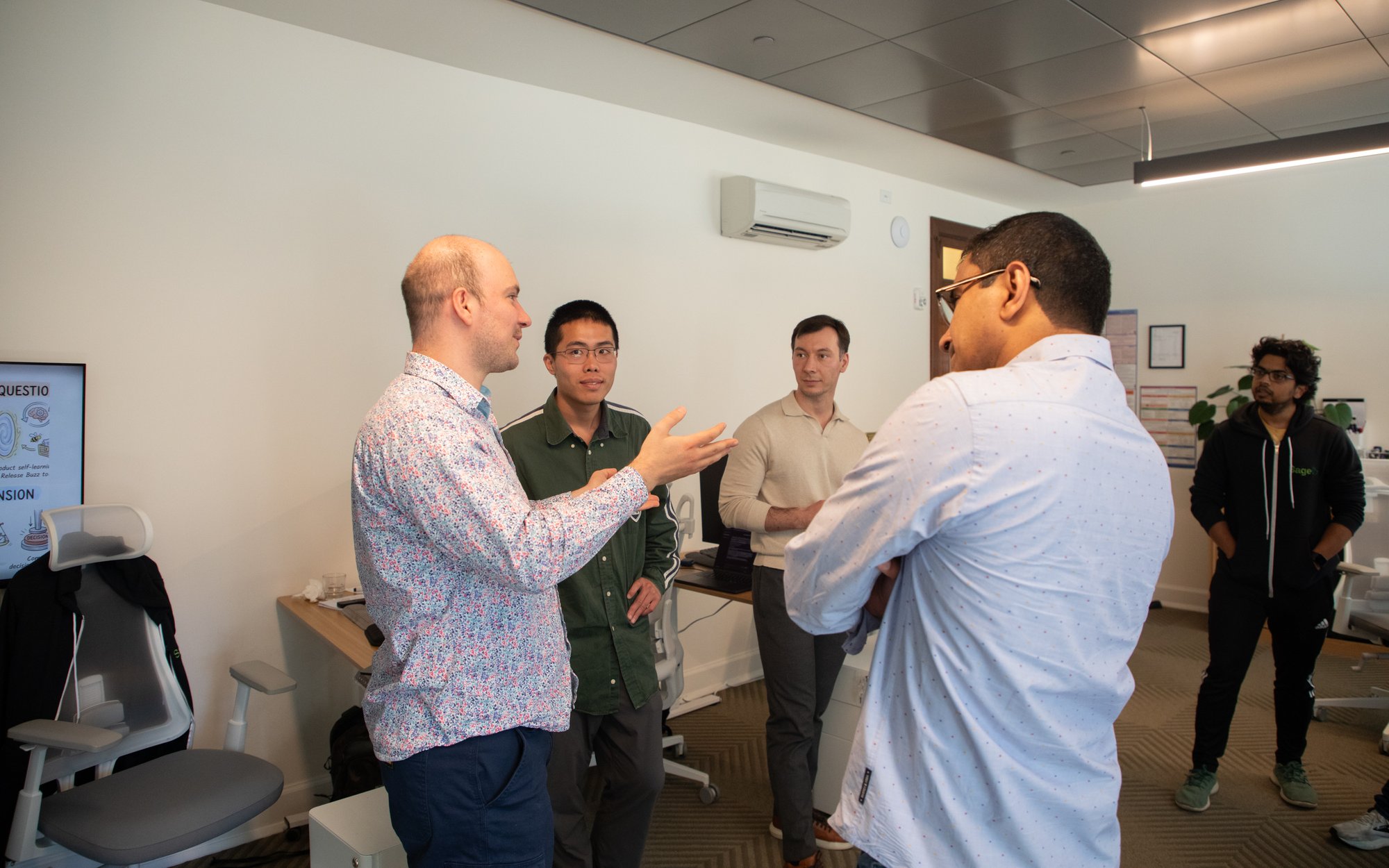

From a Whiteboard to NVIDIA
XetHub memories after NVIDIA's Hugging Face deal
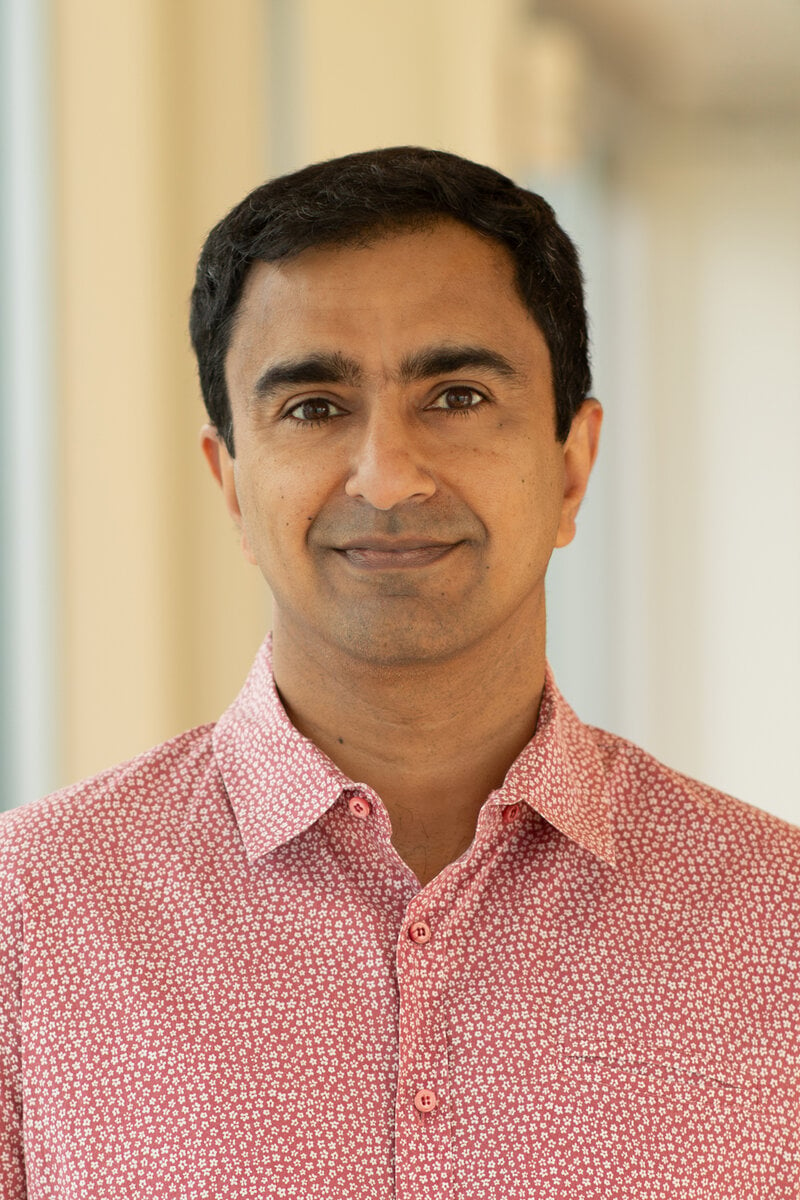
"Infra is the stuff that you build for the future you want."
I love infra. My GitHub handle is port8080. I have spent my entire career making bytes move from one place to another. The best infrastructure disappears.
Onam
Onam fell on 26 August this year. I was having sadhya with my mother and friends when my phone started going off—rumours that NVIDIA would acquire Hugging Face. I drafted this that evening and held it. On 3 September it became official. Hugging Face acquired XetHub, the company I co-founded, in 2024. I left a year ago and am not privy to anything internal; I wrote what that arc felt like in Reflections on XetHub.
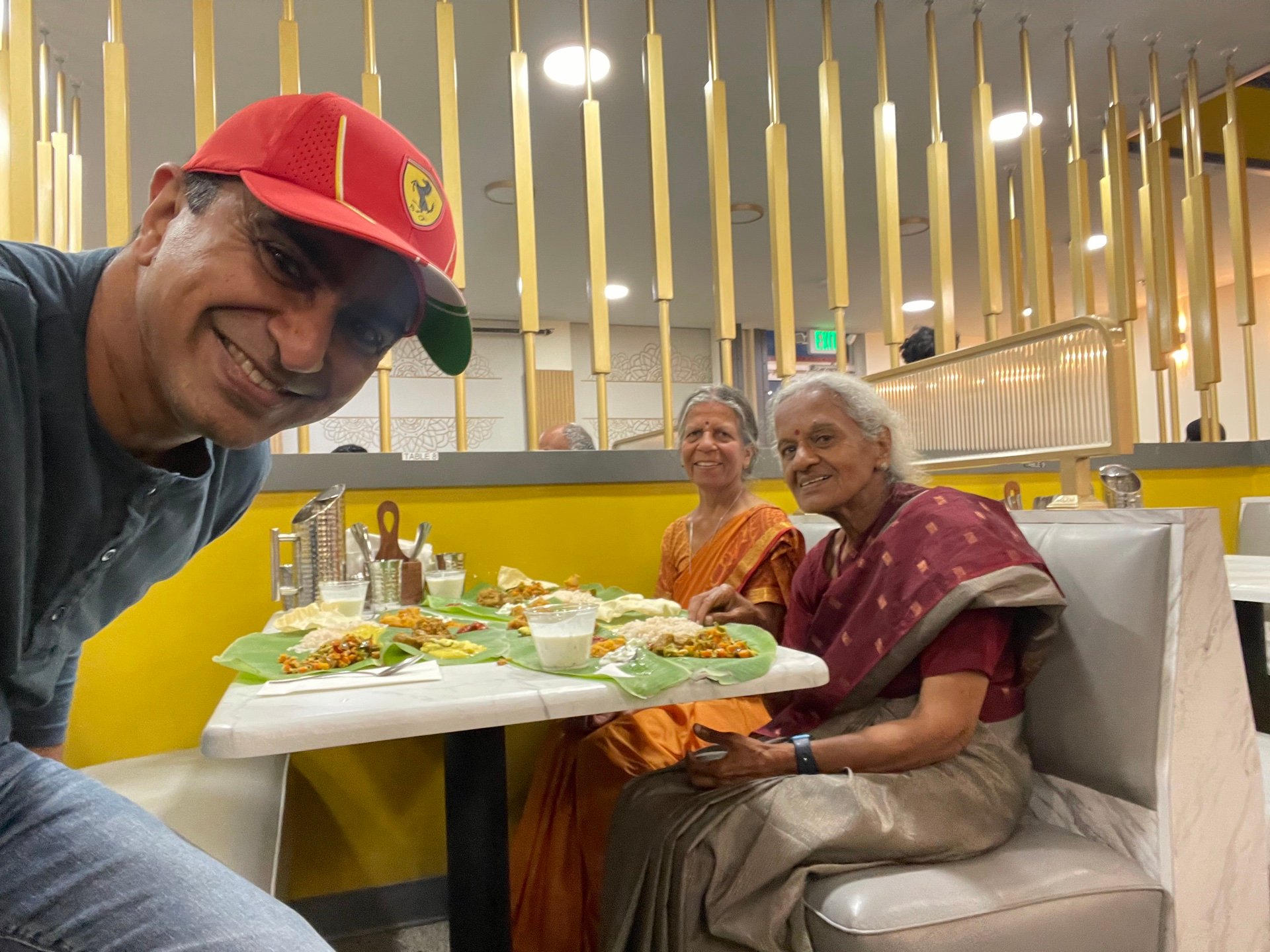
Four vignettes, with gratitude to the Xet team for building it and the Hugging Face team for betting on it.
1. CDMT
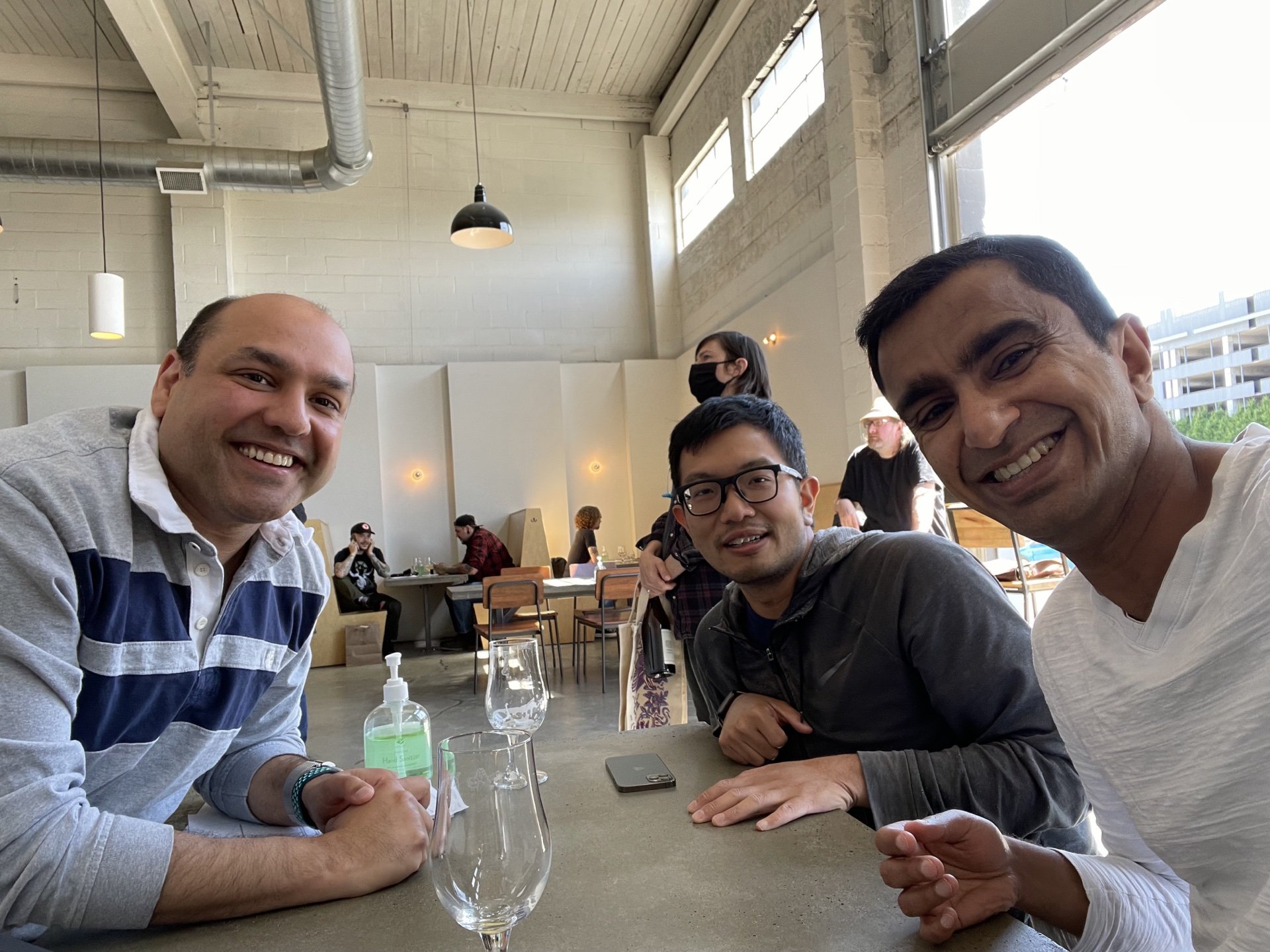
8 June 2021. Holy Mountain Brewing, Seattle. The story begins with ideas over pints of beer.
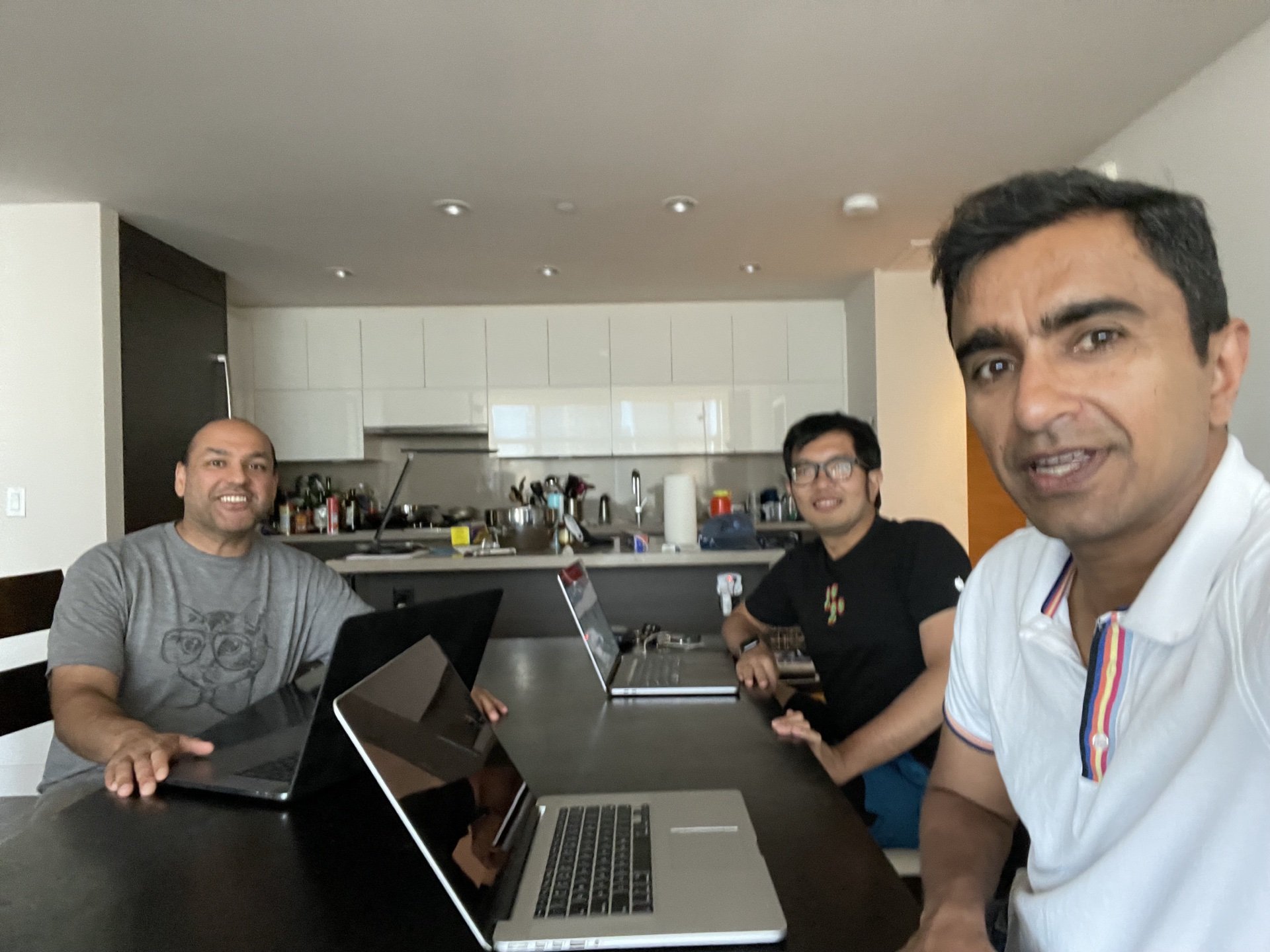
29 July 2021. Yucheng's apartment. Three laptops on a dark dining table, his kitchen behind us. This is the part of a startup nobody photographs and everybody should: no office, no funding, no name, three people hacking.
10 August 2021. Yucheng at the whiteboard with a red marker, writing four letters across the top and underlining them: CDMT. Content-Defined Merkle Tree. Below it, a tree fanning out — nodes, branches, leaves in red, with a second pass in green where the structure needed correcting mid-explanation.
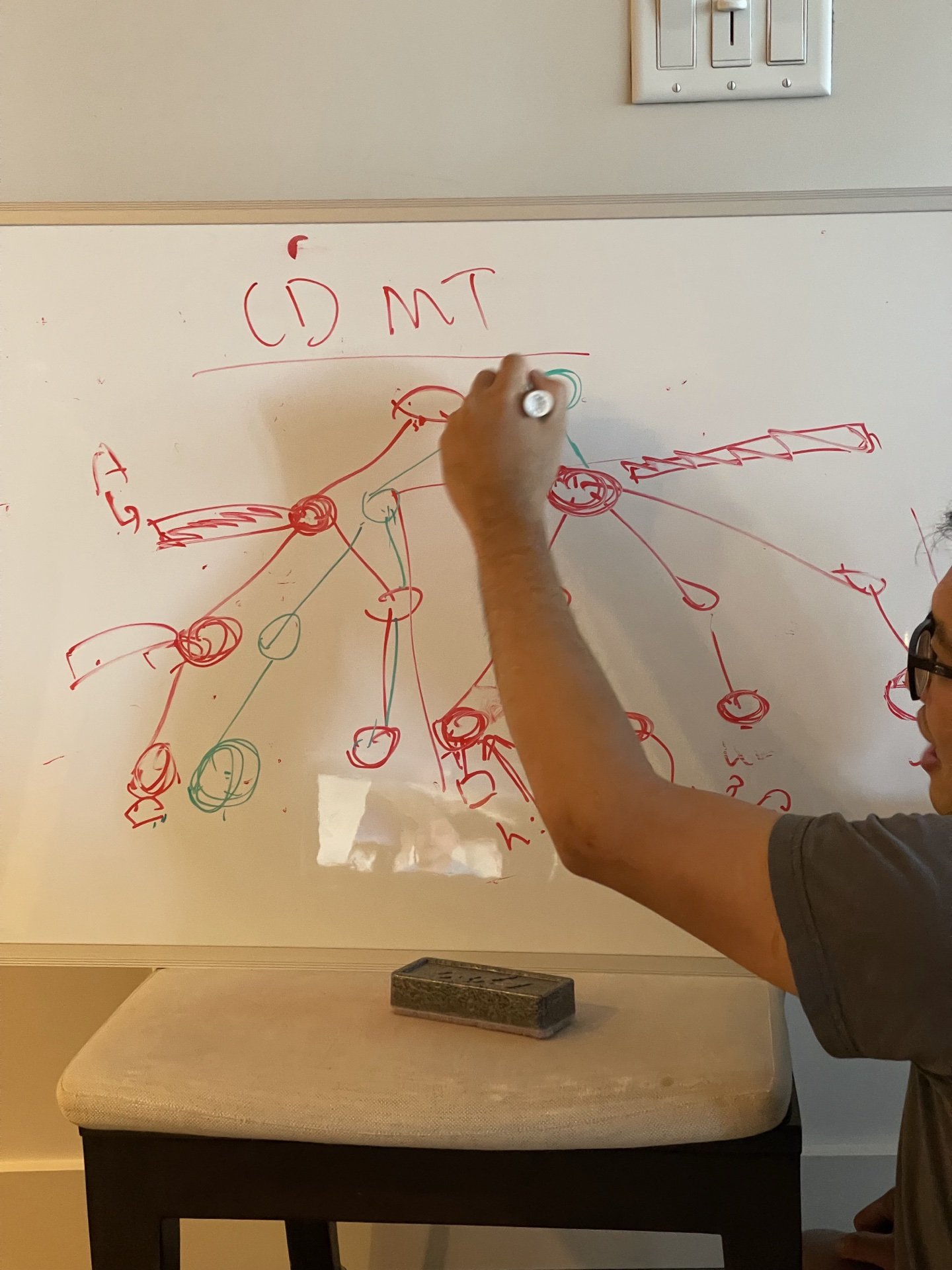
That is the whole idea, and it fit on one whiteboard. Split a file on its content rather than at fixed offsets, so an edit in the middle shifts only the chunks around it instead of every byte downstream. Hash each chunk. Build a Merkle tree over the hashes. Store each distinct chunk exactly once.
XetHub was incorporated in November 2021. The idea was not ours alone: as the DoltHub team later wrote, "People Keep Inventing Prolly Trees". Different teams kept arriving independently at the same structure.
2. Be ready not to be understood
If I had a penny for every time someone told me storage was free, or that S3 had solved the problem, I could probably have paid our S3 bill.
On 7 May 2023 my journal reads: wrote down notes from resilience for founders. That was the bottom. A team inside NVIDIA chose Artifactory over XetHub because their tech lead believed Git was not for data — our Git is for Data paper notwithstanding. Then came the "helpful" investor who insisted on comparing xet-core's GitHub stars to LangChain's. Millions of developers touch both packages every day. XetHub works under the hood. Nobody stars the plumbing.
3. Recognition
The Hugging Face diligence document was six pages. Three of them were screenshots. The acquisition happened fast.
Julien Chaumond, Hugging Face's CTO, as I remember it: we have wanted to build our git-lfs replacement. We have not had the time. He said as much in public when the deal closed.
4. Lean into your heebie-jeebies
April 2025, AWS Summit in Paris. I was there as part of Hugging Face, and I spent a meeting trying to talk one of the most senior storage leaders at AWS into inventing deduplicated storage — into building, inside S3, roughly the thing we had already built outside it.
Deduplication for AI workloads doesn't live in S3. It lives between S3, CloudFront and EC2: how bytes are chunked, where they are cached, and how fast they reach a GPU. At AWS, those systems belong to separate organizations.
Melvin Conway named this in 1968:
"organizations which design systems . . . are constrained to produce designs which are copies of the communication structures of these organizations."
A hyperscaler with separate organizations for object storage, CDN and compute will produce separate products for each. The combination is nobody's job. That left room for Hugging Face to sell the combination: storage with the CDN and egress folded in, sitting outside any one cloud. Arcee moved everything it builds onto it so it can train wherever GPUs are cheapest. SkyPilot made it a first-class backend so a job on any of twenty clouds reads the same bucket, and an appended dataset ships only the chunks that changed.
The thing that gives a big company the heebie-jeebies is the opportunity for a small one.
What I take from it
I will always love big bets in infra. The idea is never the hard part. The hard part is holding your ground for three years while everyone tells you storage is free, and then watching the thing you built carry 200PB into the acquisition.
It is always Day 1. I left Hugging Face with about a quarter of my stock vested and handed the rest back to the team because I wanted to build SageOx. Steve Yegge and I talked through the why on stage. Stay hungry, stay foolish is easy to put on a slide and expensive to actually do.