
How SageOx got into firmware
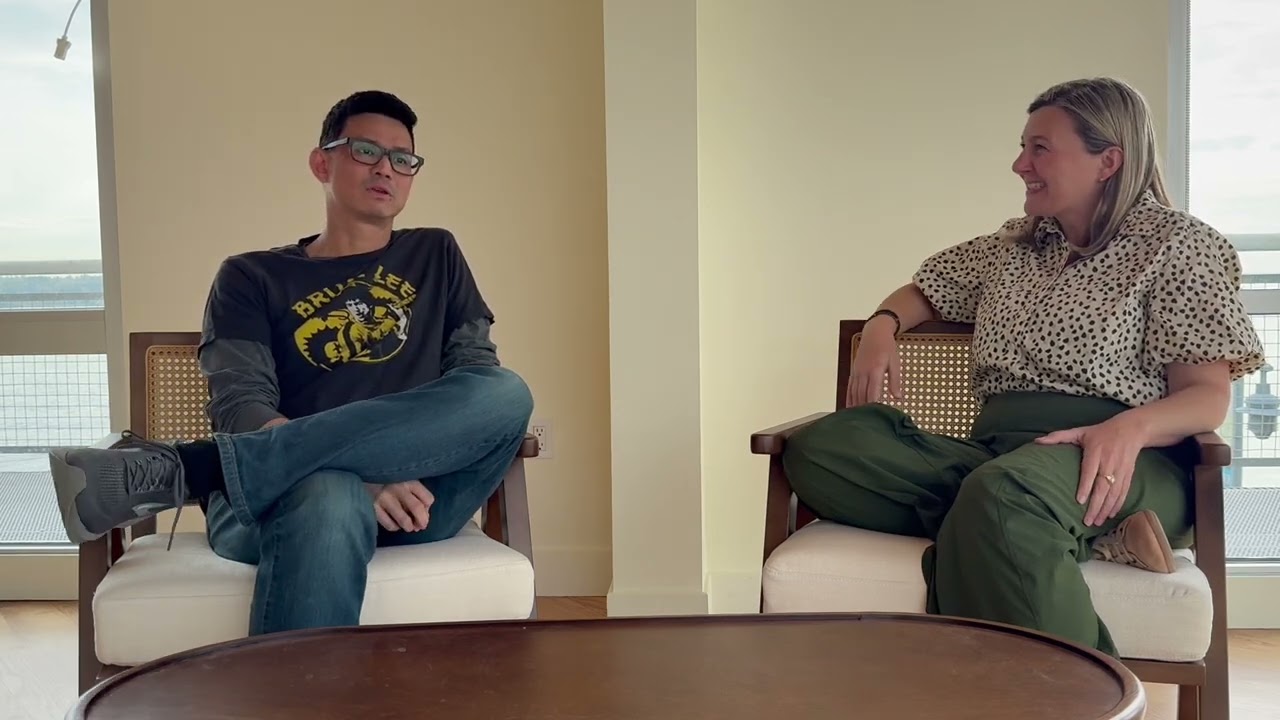
We recorded this video three months to the day after deciding to build the context layer for AI-native teams. In it, we talk about how, in less than two weeks, Ryan and Ajit built the firmware for a device we now expect to be central to our product—despite having no recent hardware experience on the team. It's been incredibly energizing to see how much creativity and innovation are unlocked when building becomes this fast and accessible.
Milkana: So today's April 20th, which is a very special date as you pointed out because it's exactly three months.
Ryan: Three months.
Milkana: Three months after we started working on this idea with this company and it's absolutely astounding to me given where we were three months ago because just so many things have come together. It's like beyond exciting. But the reason why we wanted to chat here was because last week Ryan talked about the potential for what this product can become and how it completely changes how humans and agents interact in a very seamless way and in a way that makes human interactions a lot richer and a lot more human in a way. And just the way you laid out that vision and what was possible was absolutely amazing and I was really moved to tears.
It's interesting to reflect back on how did we get here because how we got here was actually a very compressed timeline and it started a few weeks ago when we were thinking we need an always on recording device we need something and then we were all kind of running in different directions and hadn't really done any research and then Galex you joined and then you took this idea and you ran with it and that was really kind of like the first thing that got this process started.
Galex: Yeah, it's kind of fuzzy now even though it was only a couple of weeks ago. But I think we were at a lunch and someone mentioned this idea of like a room OS and Ajit was really excited about this idea about a room OS and we started kind of talking about oh what if we had a device hanging from the ceiling that was constantly recording and so we didn't have to remember to always hit record on the app or on the phone or on the computer. And I thought well that that's actually that seems like that seems plausible. Why why is that not plausible?
And I vaguely remember recently somebody posted on Hacker News, oh, someone's building something for Home Assistant. And so I thought, there's got to be something. And I went and looked around and searched, like not even 30 minutes of searching. We found a device. And it turned out that device is available on Amazon. So I ordered one on Amazon. And I actually ordered a few more from Waveshare and AliExpress.
And then the first one showed up, I think like a couple days later, maybe three. Oh, no, about a week later. About a week later. So, it's like a Thursday, dropped it into the office, and then we didn't do anything with it. We were all really busy Thursday. And then Friday night, we were all about to leave. Ajit's like, "Okay, I'm going to play with this this weekend."
And then I get a text message later that evening. And Ryan's like, "Uh, I took the device, FYI. Was that cool?"
Ryan: Well, to be fair, I actually took the device. I was like, because I was working late that I was playing with it and I bricked the device. I'm like, "Uh oh, the device is totally bricked. If I don't take it home and fix it, he's not going to be able to work on this." So, I took it home like while I'm fixing all these other things, I'm kind of experimenting with getting this thing up and running.
Milkana: And what exactly were you hoping to do? Because the device arrived as is. So, what were you like at that point? What were you hoping to achieve?
Ryan: At that point, I just wanted to boot up and like maybe be able to hit record and get something like, oh yeah, this microphone's on. That was really the hope because there's a lot of work just to get a firmware that's custom for a device up and running.
Ajit: So now I show up on the weekend thinking that there's going to be a device in the office and there isn't any device unlike WTF. And so the interesting thing here is that both Ryan and I have touched firmware way back in our life. Ryan's worked in the Kindle team in the 2006 2007 era. I did some kind of initial embedded device work in the late '90s. But then I'm like texting Ryan. I'm like yo I need this device.
And so I end up going to his place and we actually have a recording on the SageOx public repository on that Sunday where we meet up and Ryan being Ryan's done this thing where you see this device. It used to be just this, you know, black circular device, but by the time I get my hands on it, it's got our Oxy mascot on it and it is so cute. The moment you see it, you're like, "Oh, there is an element of toy likeness to it."
And actually, you should talk a little bit about how you went to that part. I thought your initial session where you kind of dropped all the PDFs and the things was a very interesting unlock because you know from the Kindle time you would have expected something like this to take like 6 months or a year and in two days you had this thing functioning and I think this is something which is very interesting that you got us to.
Ryan: Yeah I think one of the things is a lot of stuff wasn't very well documented there was like documentation different places my starting point was like okay let me do a quick search and find some working maybe a demo in GitHub some stuff from Waveshare some documentation on the thing. I mean all these things I just dumped it into Claude and said hey here's some reference things and like let's start by kind of extracting what we can and figure out how we can build any firmware on this device that might get up in our own. So that was kind of the unlock to Claude to like okay how can they play around with this device.
Ajit: So the two of us kept ping ponging back and forth. That week was actually the week after that was a we were busy with something else. One of the things that I remember on the next weekend was that I actually got that murmur from you which is going to be one of my fond memories of the development process where as it turned out this device had two form factors a V1 and a V2 and we had not figured it out because it just powers up and has a V1 or a V2 and it just goes away and we didn't know that and at one point on some Sunday you had figured it out and I remember sitting here and I felt like you know like like God has whispered into my ear saying that hey there's a V1 and what had happened was that you had done a you had figured it out and the ox murmur had fed into my Claude saying that I need to go mono versus stereo because the V1 was messing up the audio. That was such a key unlock.
But anyway, I think it's now like 8 days since Galex has shown up with this device and then I'm going to pass it back to you where we've got this thing now working to the point that we have a meeting with our dear friend Steve.
Ryan: I think the interesting thing is like we start on Friday, we handed it back and forth. Monday we actually had working reporting like you know as proof of concept that this actually could work uploading into SageOx. And so yes, it took a couple more days to kind of like work out all the kinks and to learn V1 versus V2 hardware and they worked differently.
Ajit: Wait, wait a second. We also did that video and we kind of put it up on the LinkedIn that also went viral and we started getting some really good feedback from people even at this junky state where you clearly saw that this was buggy but it was still getting something here, right?
Ryan: Yeah. So I think then it was what we were 10 days in we met Steve Yegge you know at our great origins of this company at my mom's apartment and as usual Steve's coming he's talking and talking and we plump down the device you know which here's one of these devices we plop it down the table for him you know and we started explaining what was this thing here and unlike Steve he was kind of befuddled for a little bit and like didn't know what to say when he saw it like and we talked about what it was doing and it was a good 10 minutes before he kind of had gathered all his thoughts and like could see just where this was taking us on some of his grand visions that he's kind of shared with us in the past. So I thought that was really for me a special moment.
Ajit: And you pointed out like Steve not having words which does not happen but the other gesture which I remember was that Steve made something like give it to me and what he said was that man there's just so many people who are coming up to me with giving all kinds of like these agent take flows and all of that you guys are thinking about team coordination in a different way and I want to play with this I want to play with this for my team which we are you know geographically remote etc etc etc and you know one of the things that I really take is when people are so — everybody is like oversold in tech right everybody's like yeah this is going to change your life but when you see somebody actually lean forward and want to kind of grab that thing from your hands that's a very very interesting signal.
Milkana: So I think it's very exciting to talk about and then what right so this device got to a working state we put it in front of a few people the reaction was pretty similar in that they all wanted it and they could you could see their ideas starting to just keep generating about like oh and I can do this and I can do that and we've had people, you know, send us suggestions inbound, which has been very exciting. And then that kind of led to an event that happened just late last week. The event that did bring tears to my eyes when you pieced together all of these things that could be possible because of this device and because of you know your own breakthroughs and some of the conversations that had been happening in the room and it just kept snowballing and snowballing and snowballing and that led to you buying a TV over the weekend and bringing it to the office this morning and to me that was incredible.
And you know we talked about like well how did we get here? Was it like this vision and it was a vision but it was not a vision that you started with and we worked backwards. It was a vision that kind of evolved because of a very different way of working. Can you reflect on that a bit more?
Ryan: I mean I think the ability to kind of experiment and learn quickly something that is so fundamentally different than a few years ago right like you write a stack and you implement and like okay months later you get to that point you're like okay now we have something working. What's possible? What next can we do?
Well, if that what's possible moment happens, you know, every day because you utilize all these AI tooling and techniques and ways of work, you really get that ability to every day think, well, okay, what if I can do this or what if I can do this? You can dream a lot bigger. You know, part of this came from listening to what was being said as we met customers like Mark OS. I remember the meeting with them. It's like ah like light bulbs were coming off as we're having discussions and like why isn't that possible? Like why can't we do that? You know, we have the ability to experiment and prototype in interesting ways and see if something is possible today that may not have been possible 6 months ago.
Ajit I want to talk a little bit about that. You know, when you're kind of describing this idea, you said that we have stumbled upon something which is way bigger than we started. And this is like 12 days after this initial kind of thing. And so there is like a lot of kind of why not or why not try this? And so this started off with just this idea of like yeah it must be around this this device where you don't have to take your cell phone or open up your laptop. This must be around. And this kind of this idea that much more of the solution space is explorable and actionable is something which I don't think most people get.
On one side you can say that we kind of stumbled into luck. There's a lot of hard work that happened here to make this luck possible but more than that I think the most interesting thing that we need to capture for everybody who's watching this is that what you can do in 10-12 days is just remarkably bigger than what you could do in 2025 or any time before that in human history. And I think it starts with just saying why not let's try to see what we can do and if other people have built a form factor who knows what else we can build.
And I think the other part about that whole lucky or the stumbling part is that because we're also in this world where we're showing it to people we're getting very good reaction your daughter talks about how she wants to take it to the school you know my friend is talking about how he wants to use it for his brother who has cerebral palsy so other people we can show it and they can open doors for us about like hey why don't you do this and because we're going through that idea cycle so fast we can give it to other people and play around with this and then we get new ideas and then then we cycle faster and faster.
Galex: Yeah, this point that you just made that when you actually see the product like being demoed, it's different than when someone is painting an abstract concept and you know putting together a spec. There's something different when you actually see the actual thing working because you play with it a little bit and then your mind goes to new places and when you're asking yourself what can I like what are other things that could actually happen? What could I do? And you start imagining these other possibilities.
And I think what's interesting is when we met MarkOS for example we showed them the puck they were already like really — they were they loved playing with it. But then we said, well, what imagine if you did this and you could see light up in their eyes. The ideas like light up. They could because they could actually see the device. They could see what was happening, right? New ideas, I think, become easier to visualize. Right? And I think that's what led to this cascade of like these crazy ideas that that Ryan had, right? Because he could visualize all of these things after playing with it for a few days.
Ryan: I think you're really on something there. This, you know, when it's an abstract, you can't really iterate that quickly in your mind even like is it possible? In the old days, you know, what's abstract is a spec. Like, yeah, you've written it down, but you don't know if it even works. You don't have any of this yet, but when you like touch it, you're like, well, the next step is not too far away.
Milkana: And here in this conversation, we talked a lot about speed, but one thing you call out often is that it's not just the speed that is dramatically different. It's what's possible. You know, you hadn't touched firmware in 20 years, and over a weekend, you figured out how to make this device work, right?
Ajit: Two weekends.
Milkana: But doing a bunch of other things. My point is like it's an unlock on the types of things that we can tackle not just at the speed with which we iterate.
Ajit: Yeah, I think if anybody's watching the one takeaway that I would love it if anybody takes away is that you got to be fearless about what is possible because all of us now have this AI tools in our pockets. There's just so many more things that one can try which in the past you wouldn't even have dared to try and when you start daring to try I think this whole business of stumbling upon luck happens and it's almost hard for us to capture — I mean we actually got the recording of this feeling of the room's electricity but I just want to recap when does it happen that somebody actually has tears in their eyes when they hear a vision and that happens because of this combination of like fearlessness experiment lots of hard work right there. Lots of dead ends, don't get me wrong. There's lots of trial and error, but to be able to get that feeling is something really weird. It was special.
Milkana It was the only time in my career it has happened. But I do want to call out one thing, which is we talked about this device and how we got here over the last 12 days or however long it's been. But if you just step back and look at the last three months since we started to work on this idea, I mean, the same pattern has been true throughout those three months as well. You know, I mean, we build product and infrastructure and a device and the ideas that are ahead of us now and are getting clearer and clearer and frankly bigger and bigger and that's just absolutely incredible.
Ajit: Yeah. People didn't believe us when we said that we'd written whatever many maybe like one plus million lines of code in two months. And I think the fact that this is not only doable, but it's now going to be mundane. More and more teams are going to be figuring out how to do this is something that I'm super excited about to see what human potential and ingenuity is unlocked by this. We are unlocking it in our world with like making knowledge work be very multimodal very fluid in the state of flow but this is like something which has got implications across the world of human kind of innovation and technology and I cannot wait to see what else is out there.
Milkana: Awesome.
We'll be sharing more of what we're learning as we go. Expect other interviews and takeaways. Drop us a note if you'd like a specific topic covered: feedback@sageox.ai.